Three minutes of absorption, or seven. On a food or beverage line, the span a buffer covers decides whether a short stop stays put or travels through the plant. A labeller pauses for half a minute, or an operator steps in to clear a fallen container. The event is small on its own, and what it ends up costing was settled much earlier, when somebody drew the line layout.
That earlier decision is accumulation conveyor design. Most plants describe a buffer by how much it holds: so many cans, so many cases, so many metres of belt. A more useful description is time. The question the line actually asks is how long the rest of it keeps working while one point stands still.
This article treats accumulation as a time asset rather than a storage area. We start with what happens on the floor the moment a single machine stops, then follow the cost into places nobody connects to a conveyor. After that we look at the mechanism itself. Geometry, speed staging and belt surface together decide whether a buffer protects product or slowly damages it. The closing sections cover the criteria that set buffer size, and the questions worth asking before the steel is ordered.
What Happens When One Point Stops
It helps to read a production line as one continuous flow rather than a row of separate machines. The filler feeds the warmer, the warmer feeds the labeller, and the labeller feeds the packaging end. Each unit runs at its own rated speed, and the line only looks steady because those speeds sit close enough to each other.
When a machine in the middle stops, two things begin in the same moment. Everything downstream starts to empty, since nothing new reaches it. Everything upstream keeps producing into an exit that no longer clears. The line is squeezed from both directions at once. With nowhere to put the surplus, that squeeze reaches the upstream machine within a short window. It has to stop as well.
Restarting is not free either. A line that halts hard comes back in sequence, machine by machine, and the products caught in process may not survive the wait. A heat zone makes that wait actively harmful, since the product sitting inside goes on absorbing heat it was never meant to take. A brief jam at one station can end as scrapped product and a long restart.
Operational Impact
Most of the cost of this pattern never appears under the heading it belongs to.
The first loss is the one nobody records. Short stops rarely get logged, because the line was only down for a moment and the shift report still shows it as running. No single event looks worth writing down. By the end of the month those unlogged minutes are large enough to show in the output figure.
The second loss arrives disguised as a quality problem. When product piles against a halted section, the containers at the front carry the weight of everything behind them. Thin-walled cups dent, labels wrinkle and seams deform under that load. The defect gets recorded against the labeller or the capper, since that is where somebody noticed it. The cause sits in conveyor behaviour a few metres upstream.
The third loss is planning credibility. A line without meaningful buffer runs in a stop-start rhythm that the production plan never quite matches. Delivery dates get promised against rated speed and met at actual speed. The gap between the two gets argued about in meetings instead of measured on the floor.
For an operations manager, that is the practical meaning of accumulation. It is not an accessory bolted onto the line. It sets how much of a normal working day survives contact with normal working faults.
The Core Engineering Mechanism
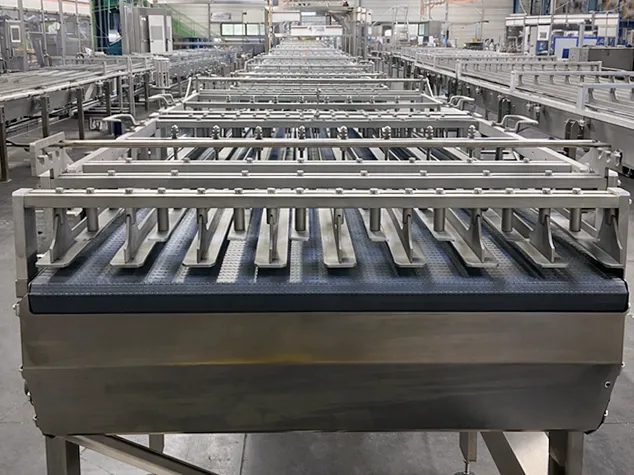
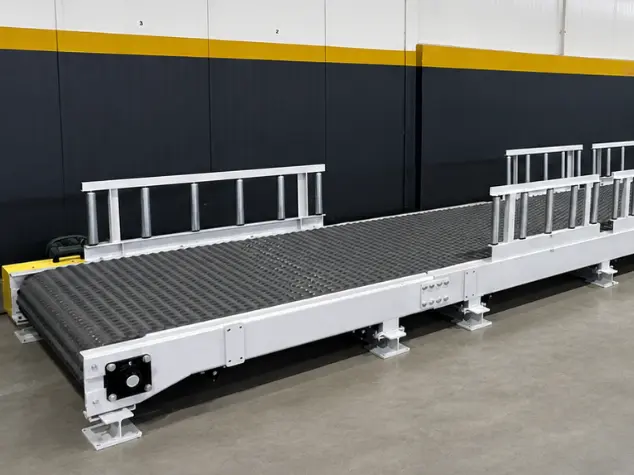
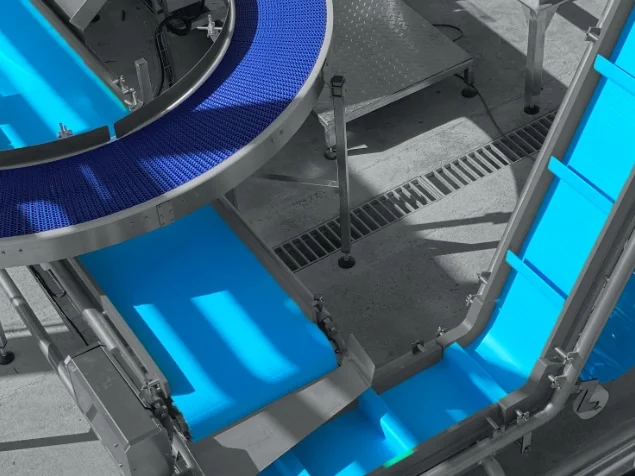
An accumulation conveyor is a section of the line that can hold product for a while without passing it on. The right unit for it is minutes, not metres. Absorption time follows from how many products the zone holds and how fast the line consumes them. The same length of conveyor therefore gives very different protection on a slow line and a fast one.
That part is arithmetic. The engineering sits in a harder condition: whatever pressure builds between waiting products has to stay under what the product can take. A filled case carries the weight of the row behind it. A thin-walled cup does not, and once it deforms it jams the section and creates a second stop on top of the first. At that point the buffer has become the source of the problem it was built to solve.
Two design elements carry that condition. The first is speed staging. When each zone runs a little slower than the one feeding it, product loses speed in small steps instead of all at once. Every boundary then takes a share of the change. Without staging, the entire difference lands on one transfer point, and back pressure gathers exactly there.
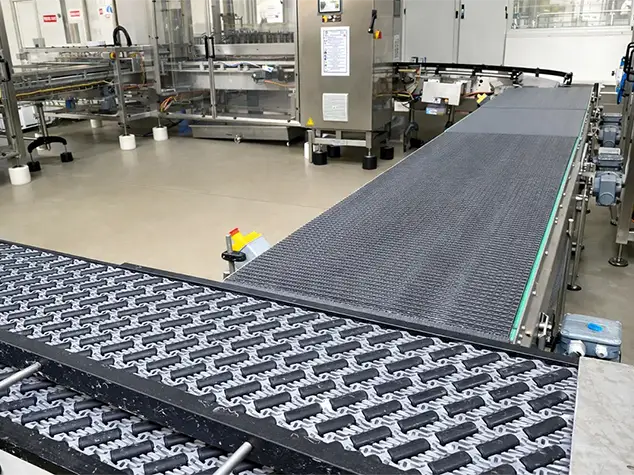
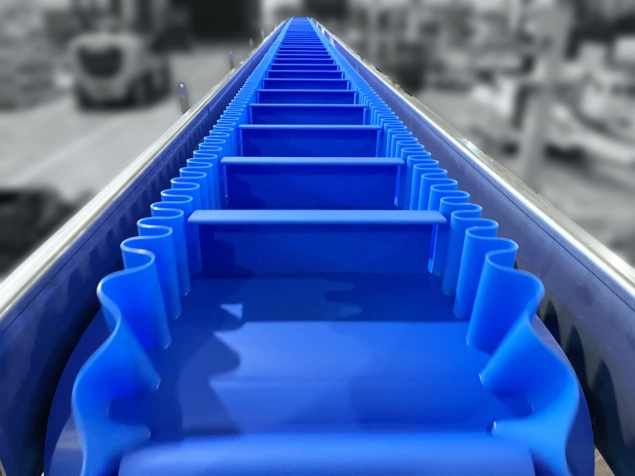
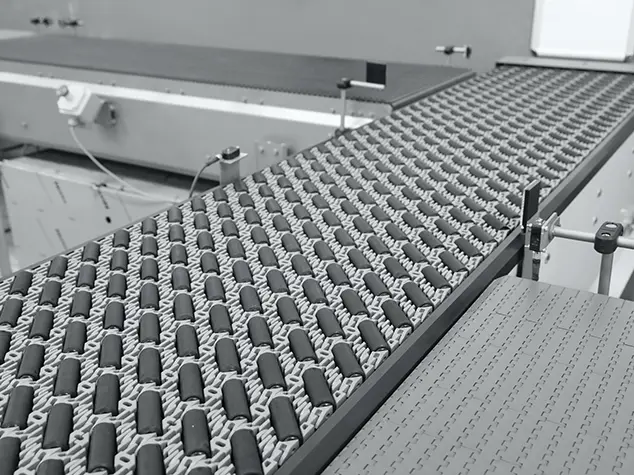
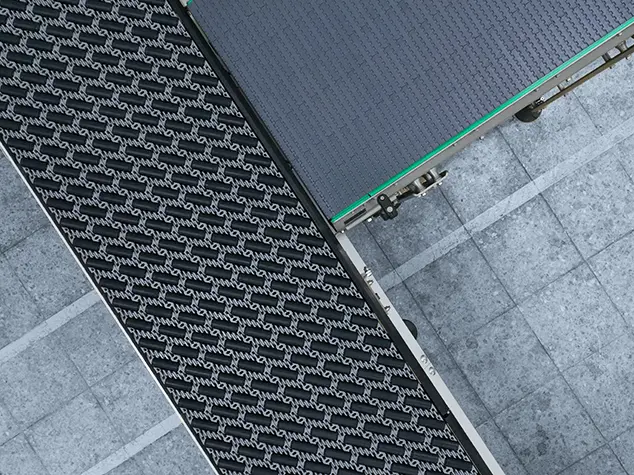
The second element is the belt surface, and it works against intuition. High grip usually counts as a virtue, since grip stops product sliding during acceleration. Inside an accumulation zone the requirement reverses, because product needs to stand still while the belt keeps moving underneath it. A surface with too much grip drags stopped product forward into the row ahead and builds the very pressure the design was meant to prevent. The belt surface belongs to the job of the zone, not to the line as a whole.
Solution Options
There is more than one way to build accumulation, and every choice carries a cost.
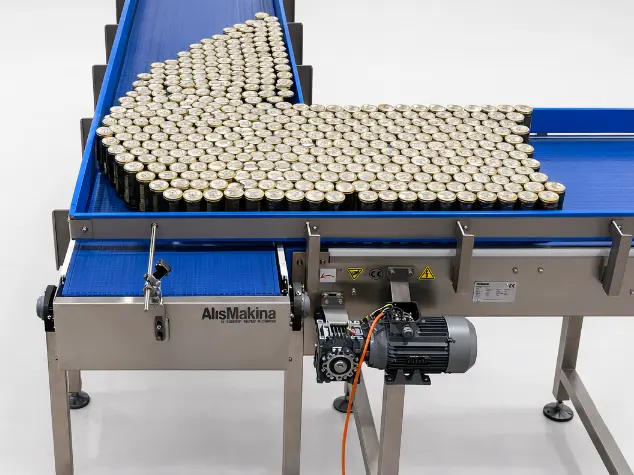
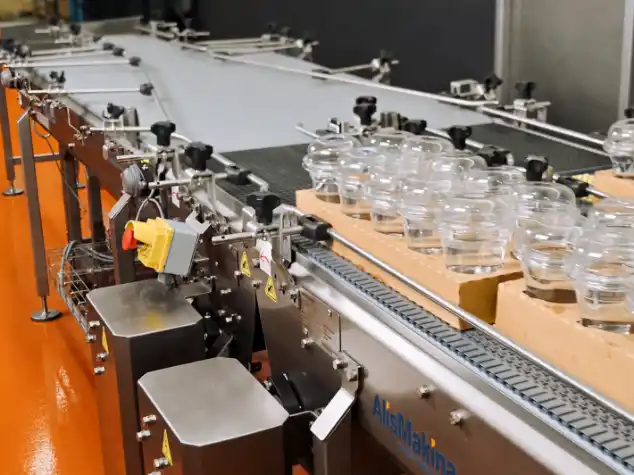
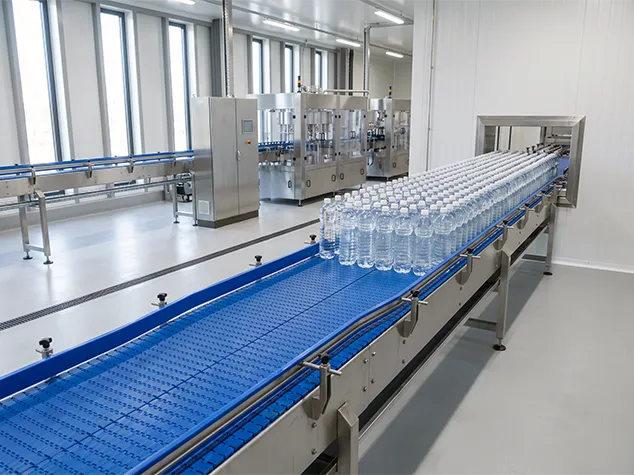
Contact accumulation lets each product rest against the one ahead of it. The arrangement is compact and mechanically simple, and for sturdy items such as filled cases it is often the right answer. For thin-walled containers, open food products or anything with a printed surface, that contact is itself the damage mechanism.
Pressureless accumulation keeps products separated while they wait, using zone control so a section only releases when the next one has room. It costs more conveyor, more drives and more integration work than a single long belt. In return the contact damage mechanism disappears, which is why fragile and unpackaged products usually call for this approach.
Fixed-speed and variable-speed buffers differ in how they respond to the event. A fixed-speed zone simply fills when the exit blocks and empties when it opens, and nothing between those two states is managed. A variable-speed buffer works from a fill level reading and a control routine that compares it against a target. The routine then trims belt speed in small steps to close the gap. It only works if the conveyor under it can change speed without losing control of the product. Otherwise the control side and the mechanical side spend the shift fighting each other.
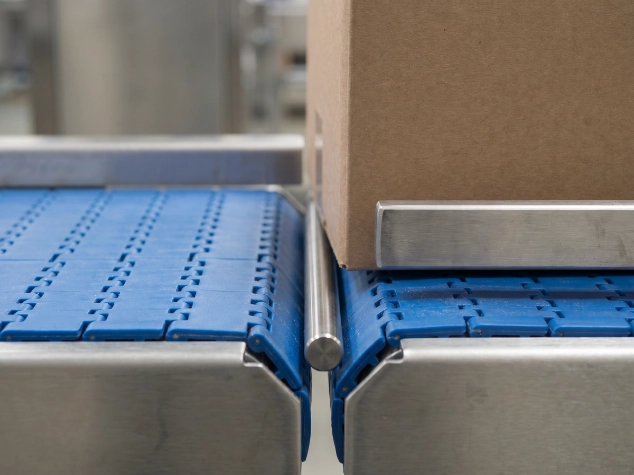
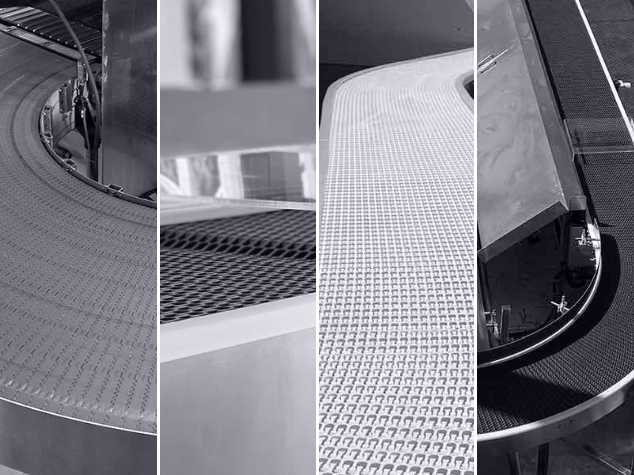
Belt selection sits underneath all of these options, and it asks two separate questions at once. One is the grip described above. The other is openness measured against the product base. When the gaps in the belt are larger than the base standing on them, a small container loses support at each speed change and handover. The two properties do not conflict: the surface you want is closed enough to support the product and low-friction enough to let it stand still. Belt families such as Intralox S570 answer the openness side with a closed carrying surface. A coarse or open surface lets small bases catch and tip, and on a food line it also traps residue where cleaning access is poorest.
Design Criteria
Buffer size is not a matter of filling whatever floor area happens to be free; a handful of parameters decide it.
The first is the event the line needs to absorb. A realistic stop duration comes out of maintenance history rather than optimism: what actually takes the labeller offline, and for how many minutes. Buffer time gets sized against that figure, and the design carries a margin on top. The stop that tests the number is never the average one.
Product type sets the accumulation method. Fragility, base size, surface finish and whether the product is packaged at all point toward contact or pressureless design long before anyone compares two suppliers.
Line rate converts time into length. Holding one minute of production takes far more conveyor at high speed than at low. This is where the required absorption time meets the available floor.
Placement matters as much as size. Strain concentrates at the boundaries between different rhythms. On most lines those boundaries sit just after filling, at the outlet of a heat or cooling zone, and in front of packaging. A buffer placed away from them holds product without protecting anything.
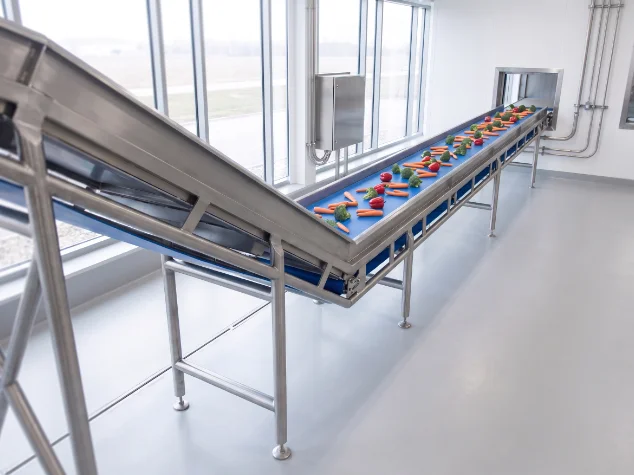
Hygiene closes the list on food lines. An accumulation zone is where product stands still, so it is also where residue settles. Cleaning access has to enter the design at the layout stage rather than after installation.
One diagnostic is worth carrying into every design review. A buffer that sits permanently full is not buffering, it is queueing, and that points to a downstream section that cannot keep up. An empty buffer is normal on a line that is not stopping. It becomes a warning only when the line stops and the zone still never fills. That points to a buffer sitting away from the stop it was meant to cover. On a permanently full buffer, extra length is not the answer either, because the rates on either side have to be balanced first.
The Aliş Makina System Perspective
At Aliş Makina we treat accumulation as a flow control question rather than an equipment category. The difference shows in the order of the questions. Before selecting a conveyor we ask which events the line has to ride out and how many minutes each one lasts. Two more questions follow: how the product behaves once it stops moving, and where the rhythm of the line actually breaks.
Those answers then decide the geometry, the number of zones, the speed steps between them and the belt surface underneath. None of these are independent selections. Change the belt surface and the safe holding pressure changes with it. Change the zone count and the speed steps have to be drawn again.
We design and integrate lines as a single flow. The buffer gets drawn while the rest of the line is still on the table, not fitted into whatever space survives the layout. Our scope covers the mechanical and flow side of that work. The design intent is plain. In normal operation the line should carry a short interruption on its own, without an operator standing beside it to manage the recovery.
FAQ
What is an accumulation conveyor?
An accumulation conveyor is a line section that holds product temporarily instead of passing it straight on. It lets the rest of the line keep running while one machine is stopped or slowed. Once the blockage clears, the held product is released in a controlled way rather than all at once.
How is the right buffer size decided?
Size follows from time, not from product count. The design team takes a realistic stop duration from maintenance history, then works out how much product the line produces during that period. Line rate converts that figure into conveyor length, and floor area is a constraint on the answer rather than the starting point.
What is the difference between contact and pressureless accumulation?
In contact accumulation, waiting products touch and rest against each other. It is compact and works well for sturdy packaged goods. Pressureless accumulation keeps products apart using zone control, so nothing carries the weight of the row behind it. Fragile, thin-walled or unpackaged products need the pressureless approach.
Why can a high-grip belt cause problems in an accumulation zone?
Grip is useful where product must not slide, such as inclines and acceleration sections. In an accumulation zone the opposite is needed, because product has to stand still while the belt continues underneath. A high-grip surface drags stopped product forward, pushes it into the row ahead and creates back pressure by itself.
Where should buffers be placed on a line?
They belong at the boundaries between different rhythms, where one machine hands over to another running at a different pace. On most food and beverage lines that means the area after filling, the outlet of a heat or cooling zone, and the approach to packaging. A buffer placed away from these boundaries stores product without protecting the line.
What does it mean if our buffer is always full?
A buffer that stays permanently full is behaving as a queue rather than as a buffer. It usually means the section downstream cannot keep up with the one feeding it. Adding more conveyor length will not fix that, because the two rates have to be balanced first. An always empty buffer is a different case: on a line that rarely stops, that is what a healthy buffer looks like.
Conclusion
Unplanned stops do not disappear from a production line. What changes, and what design actually controls, is how far each stop travels before it is contained.
That containment comes from treating accumulation as a timed part of the flow rather than a length of spare conveyor. The zone has to hold the right number of minutes for the events the line really sees. It has to hold them without letting product carry the load of the queue behind it. The belt surface under the zone also has to let product stand still while the belt moves on.
Designed that way, a buffer changes what a fault means. The labeller still jams, but the filler keeps running and the heat zone keeps clearing. The shift then ends closer to its target. That quiet continuity is what good accumulation conveyor design is actually for.
We describe how an accumulation zone is built into a line on the Accumulation Conveyor page, and how it works on a can line on the Metal Can Line page.