Introduction: Why is Correct Belt Material Critical?
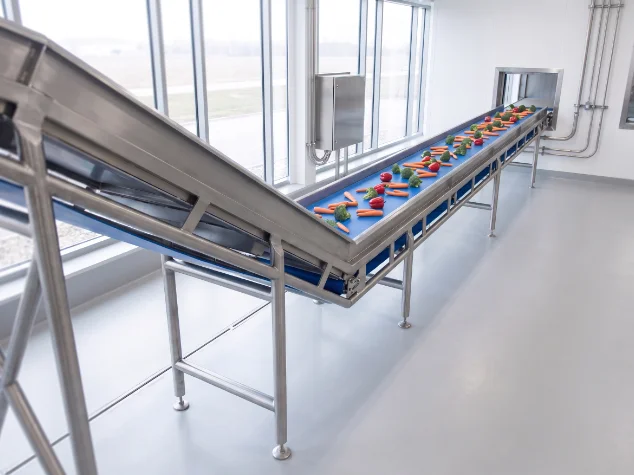
Modular plastic belt conveyors do not only serve a transport function in production lines. Line continuity, product stability, hygiene level, and maintenance intervals are directly dependent on belt material. Therefore, correct selection of plastic material used in modular conveyor systems is one of the fundamental factors determining overall system performance.
Belt material should be evaluated together with parameters such as line speed, product weight, ambient temperature, cleaning method, and chemical exposure. Incorrect selection leads to premature wear, product instability, and unplanned downtime. Aliş Makina addresses each application on a process basis and determines modular belt material according to line conditions.
Basic Plastic Materials Used in Modular Conveyors
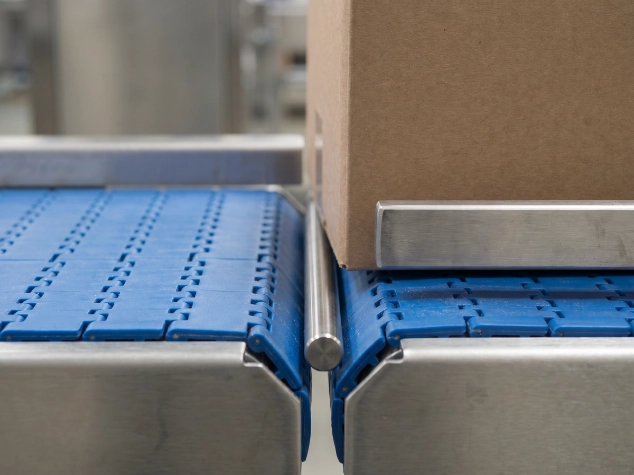
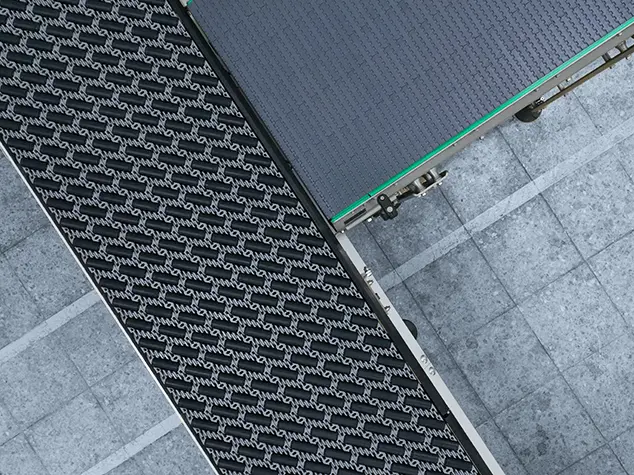
Modular conveyor belts consist of injection-molded thermoplastic modules. The most commonly used materials in these systems are PP, PE, and POM. Each offers different mechanical and environmental advantages.
Polypropylene (PP)
It is a lightweight and economical material. It has high chemical resistance and works efficiently under low to medium loads.
Typical applications: Dry food lines, packaged product conveying, secondary packaging and light load applications.
Polyethylene (PE)
Maintains flexibility at low temperatures and has high impact resistance. Product friction is low due to its slippery surface.
Typical applications: Cold environments, frozen food transfer, humid and wet processes.
Acetal (POM)
Offers high mechanical strength and low coefficient of friction. Operates stably at high speeds due to its dimensional stability.
Typical applications: Beverage lines, bottle and case conveying, high-speed filling and diverting systems.
Note: PU and ThermoDrive belts are not modular plastic belts.
PU belts are in the single-piece hygienic belt class, while ThermoDrive is a special monolithic and positive-drive belt technology. They are not evaluated in the same category as modular belts.
Technical Performance According to Material Properties
-
Mechanical Strength
POM modular belts provide stable performance on long lines and at high speeds due to their high tensile strength.
PP belts reduce energy consumption with their low weight.
-
Temperature Resistance
PE belts operate at low temperatures without risk of cracking.
POM belts maintain dimensional stability in medium temperature ranges and are preferred in lines following hot filling.
-
Chemical Resistance and Cleaning
PP and PE can be safely used in lines with intensive detergent and chemical use.
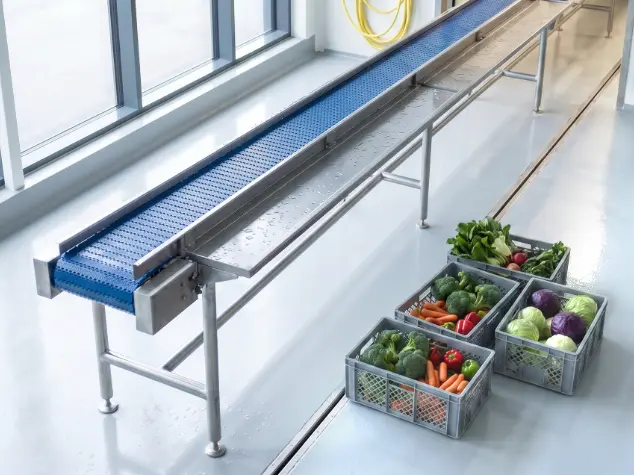
Open-area modular belt geometries facilitate drainage and shorten cleaning times.
-
Noise and Flow Stability
POM belts operate with low vibration even at high speeds.
Correct module geometry and line design reduce the risk of product tipping and jamming.
Correct Belt Selection According to Application
Modular belt material selection should be made by evaluating product type and process conditions together.
- Beverage bottle and can lines: POM
- Dry food and packaged products: PP
- Cold and humid environments: PE
- Direct contact lines requiring high hygiene: PU or ThermoDrive systems instead of modular belts
This approach maintains line efficiency while extending belt life.
Aliş Makina's Engineering Approach
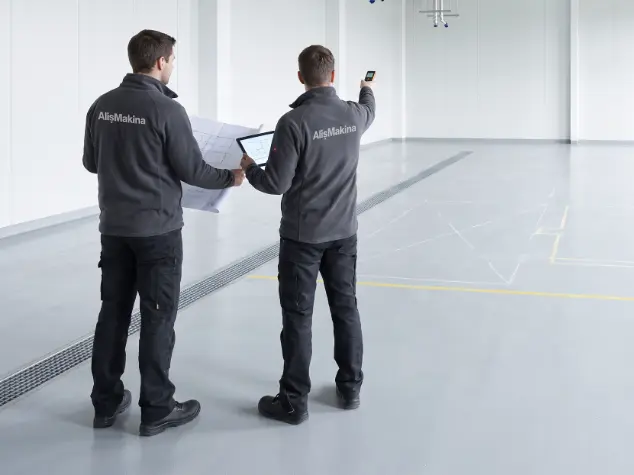
For Aliş Makina, belt material selection alone is not sufficient. The material is addressed together with the correct module type, correct line geometry, and appropriate speed profile.
Each project is evaluated with the following steps:
- Analysis of product and process conditions
- Determination of appropriate modular belt material
- Optimization of line layout and transition points
- Production and test processes compliant with CE standards
This approach enables the design of long-lasting and stable conveyor systems.
Conclusion: Belt Material Selection is a Design Decision
Modular conveyor belt material selection is a critical decision not only in terms of mechanical strength, but also in terms of production continuity, cleaning efficiency, and total cost of ownership.
With the right material:
- Unplanned downtime is reduced
- Maintenance periods are shortened
- Industrial conveyor lines operate more stably
Aliş Makina engineering team determines the most suitable modular belt solution for each line on a process-based approach.
Select the Right Belt Material for Your Production Line
Increase efficiency in your modular conveyor system with the correct belt material.
Let Aliş Makina design the process for you with engineering solutions customized to your application.