36,000 cups an hour, two lanes coming in, one lane going out, and zero dented cups allowed. That is the job at the end of a packaging line, where products almost never arrive in the shape the next machine wants. A shrink wrapper bundles cups two lanes wide. The x-ray inspection unit that follows it accepts one cup at a time. An end-of-line single filing system is the engineering that lives in that gap, and it decides whether the whole line runs smoothly or stalls at the finish.
This sounds like a small detail. It is not. Squeezing two moving lanes into one, at thousands of units per hour, without bruising a single cup, is one of the harder transitions in food and beverage handling. Get it wrong and products jam, the inspection feed starves, and the line behind it backs up.
This article walks through that transition the way an engineering team approaches it. We start with the production problem, move to the operational cost of solving it badly, explain the mechanism that makes a clean merge possible, and then cover the solution options, the design criteria, and the system view that holds them together. The numbers and components come from a real cup line built for a food producer.
2. The Problem at the End of the Line
The picture is simple to describe. The shrink wrapper runs continuously and pushes finished cups out in two parallel lanes, side by side. At full speed it sends out up to 72 products per minute, two cups at a time.
Downstream sits the x-ray station. It scans every cup for foreign objects before the product is allowed to ship. That station has one strict requirement: it reads a single file. Two cups arriving together cannot be inspected reliably.
So the line has a built-in conflict. The machine before the inspection works in twos. The inspection works in ones. Something between them has to turn two lanes into one, continuously, and hand the inspection a clean, evenly spaced single stream.
3. Operational Impact
When this transition is poorly engineered, the damage is rarely one dramatic failure. It shows up as a string of daily losses.
First, product damage. If the two lanes are forced together too sharply, cups collide at the merge point. Edges dent, lids loosen, and a food product that looked fine now has to be pulled. For a chilled or sealed item, a bruised cup is a scrap cup.
Second, line stoppages. A merge that jams sends pressure backward. The cups behind pile up against each other. That back pressure pushes into the shrink wrapper, and when the buffer fills, the upstream machine has to stop. One narrow point dictates the speed of the whole line.
Third, inspection reliability. The x-ray unit needs even spacing to read each cup cleanly. If the single file arrives clumped or gapped, the scanner may reject good product or, worse, miss a real defect. Both outcomes cost money and trust.
For an operations or quality manager, this is the real meaning of the transition. It is not a conveyor detail. It is the difference between a line that hits its shift target and one that fights itself at the finish.
4. The Core Engineering Mechanism
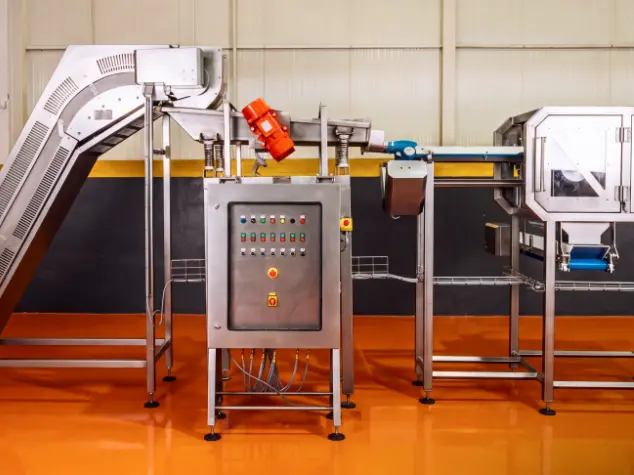
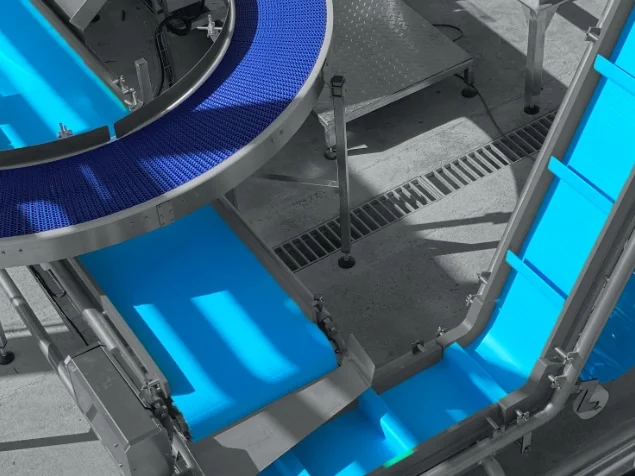
A clean single filing system is not one machine. It is a sequence, and each stage does one job before handing the product to the next.
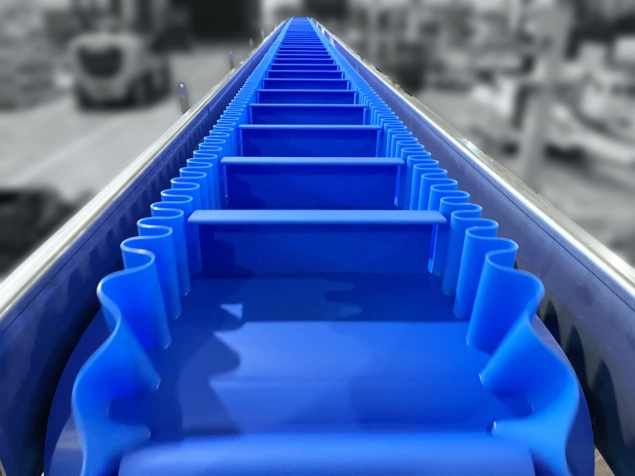
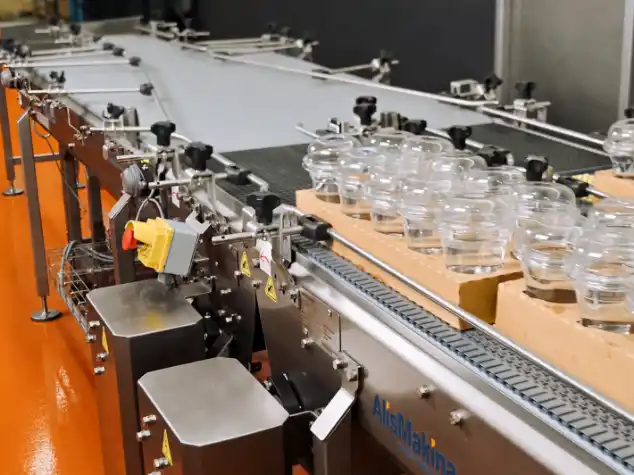
The first job is buffering. Two accumulation conveyors sit right at the shrink wrapper exit. Their role is to absorb the surge. A shrink wrapper does not deliver a perfectly steady flow, so the buffer smooths the bursts. Think of it as a holding lane in traffic: when the road ahead slows, cars wait here instead of crashing into each other. For the line, that means the downstream stages never see a sudden flood.
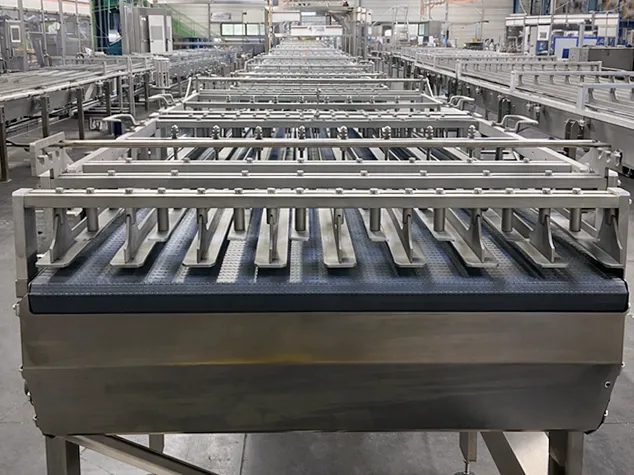
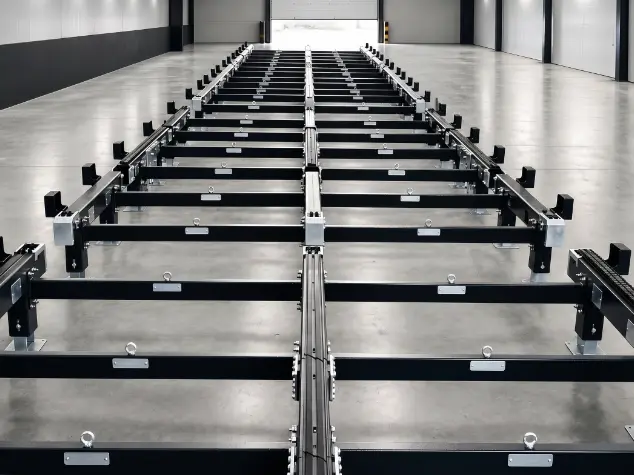
The second job is spreading. Three lane-opening conveyors then increase the distance between products step by step. Short conveyors running at rising speeds gently pull cups apart so they no longer touch. Spacing has to be created before the lanes can be combined. Crowded cups cannot merge without colliding.
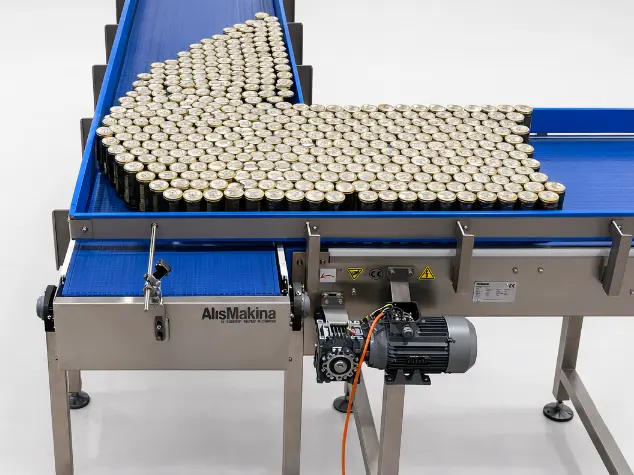
The third job is merging. A single wider merging conveyor brings the two spaced lanes down to one. This is the heart of the system. The geometry guides cups from two streams into one ordered file, and it does so without back pressure. No cup is shoved into the one ahead of it.
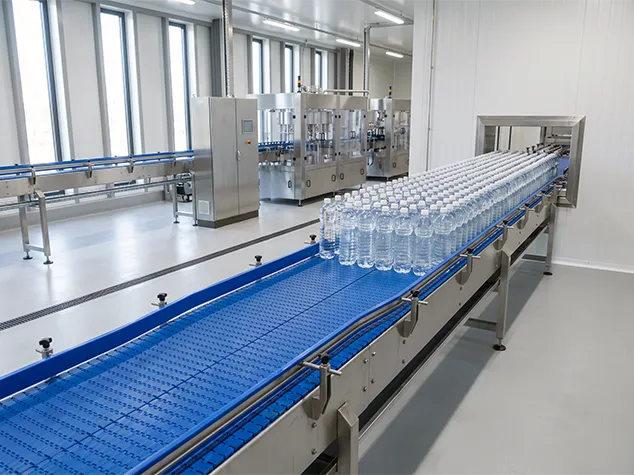
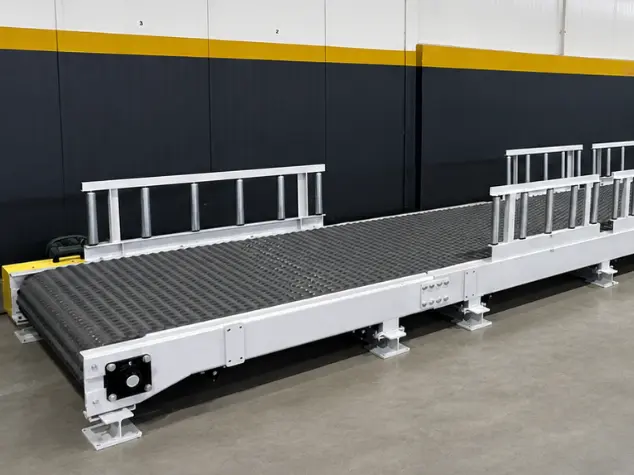
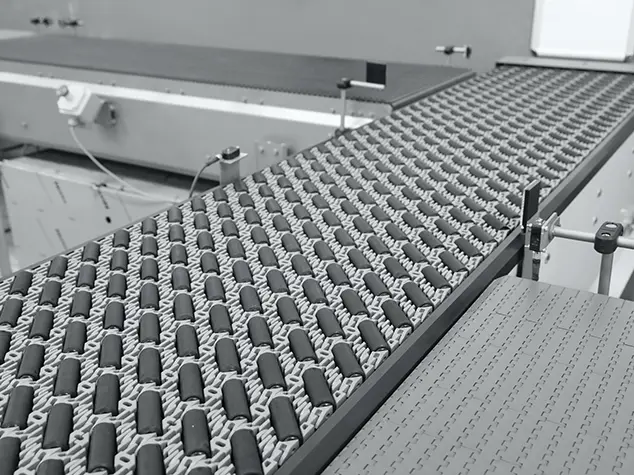
The fourth job is delivery. A final collecting conveyor with idle rollers acts as a last buffer and presents an even single file to the x-ray feed. By the time a cup reaches the scanner, it is alone, upright, and evenly spaced.
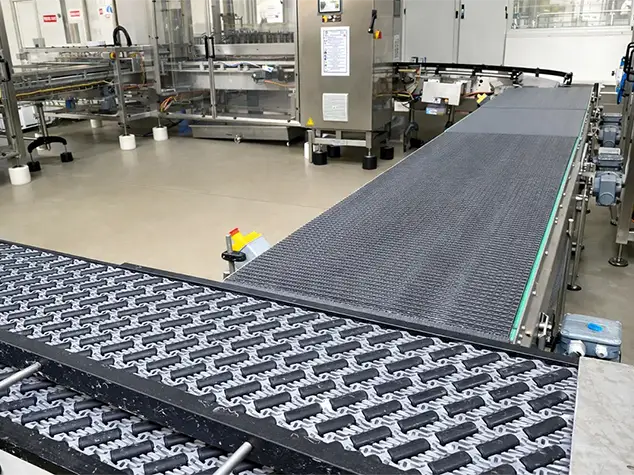
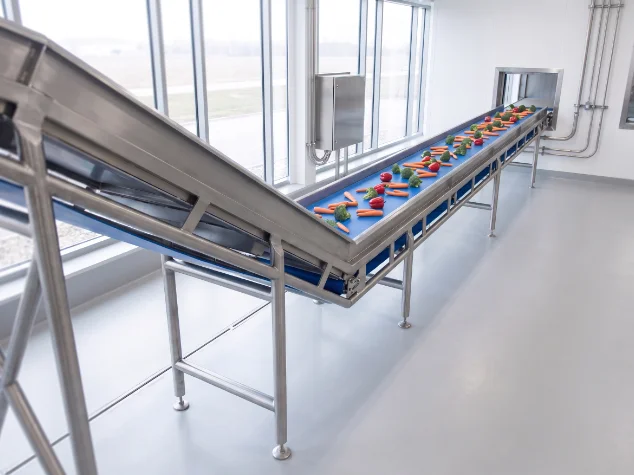
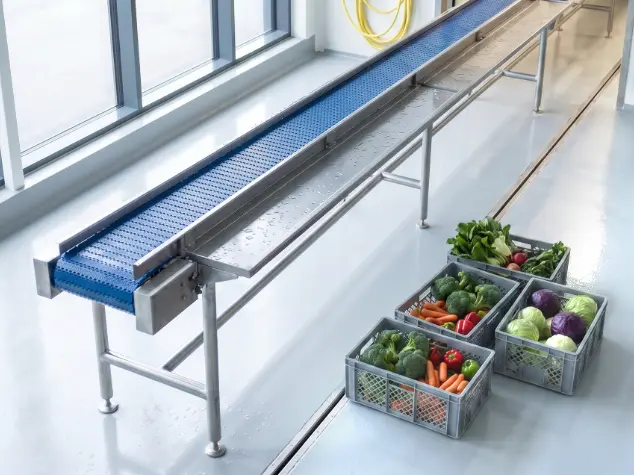
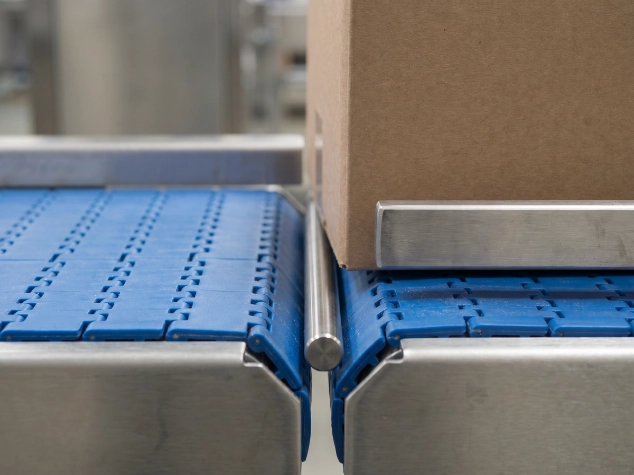
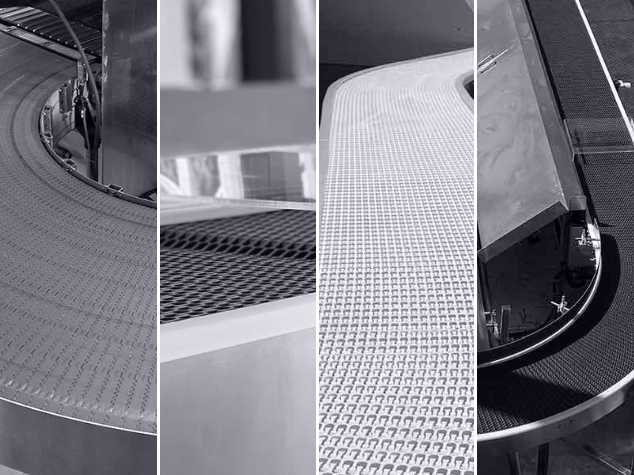
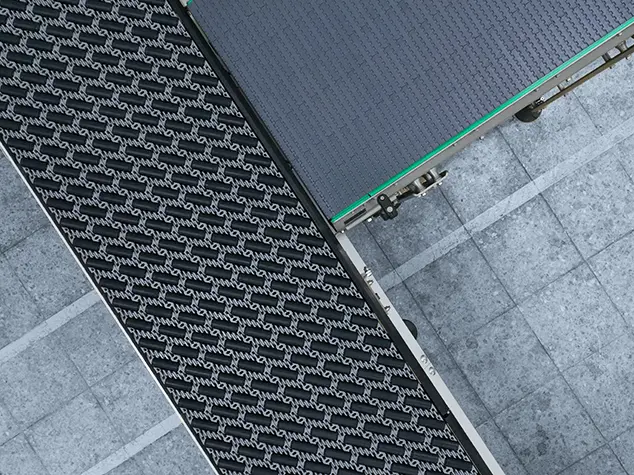
The belt surface ties all of this together. A closed-surface modular belt keeps small cup bases fully supported and stops them from tipping or catching at transfers. That choice is what lets the cups stay upright through four handoffs.
5. Solution Options
There is more than one way to bring two lanes to one, and each carries trade-offs.
A mechanical guide rail is the simplest approach. Fixed rails funnel the two lanes together. It is cheap, but it works by pushing products against each other. For sturdy items it can be fine. For thin-walled cups at high speed, the contact force damages product, so it is the wrong tool here.
A pressure-less merge, the approach used on this line, separates the steps. Buffer first, open the spacing, then combine. It needs more conveyors and more control, but it removes the collisions. Each cup moves into the single file on its own, not because the cup behind it pushed.
Belt selection sits underneath both options. A closed, hygienic modular belt supports small bases and resists the residue a food line creates. An open or coarse belt surface would let cups catch and tip, and it would trap product debris.
Line architecture is the final choice. A compact sequence of short, purpose-built conveyors gives more control than one long belt trying to do everything. Each stage can run at its own speed, which is exactly what graded spacing requires.
6. Design Criteria
A few parameters quietly decide whether the system works.
Product type comes first. A light, sealed cup behaves differently from a glass jar or a can. The cup demands a supportive belt surface and gentle transfers, because it tips and dents easily.
Line speed sets the spacing math. At up to 72 products per minute, the lane-opening stages have to create enough gap in a short distance. The conveyor lengths and speed steps are sized for that rate, not a generic one.
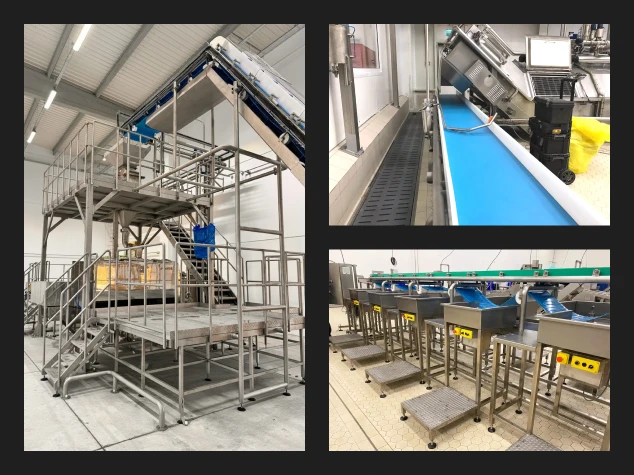
Hygiene drives material choice. On a food line, every metal part is AISI 304 stainless steel, and the conveyor bodies follow a hygienic design that can be cleaned without trapping residue. The belt surface is closed for the same reason. Wear parts use food-grade engineering plastics such as PE1000 and Delrin.
Belt height and ergonomics matter for the operators. The belt top height is held around 900 mm, which keeps the line at a comfortable working level and consistent with the machines around it.
Safety closes the list. Every moving part is covered by a guard, so the operating staff stays protected without slowing the line.
7. The Aliş Makina System Perspective
The lesson from a project like this is that single filing is not solved by buying one clever conveyor. It is solved by treating the whole end of the line as one behavior.
The buffering, the spacing, the merge, and the final feed are not four products bolted together. They are one continuous flow problem. The speed steps between them, the belt surface under them, and the geometry at the merge all have to agree. Change one and the others shift.
This is how Aliş Makina approaches the work. The line is designed as a system, with the geometry, the belt choice, and the flow function decided together rather than in isolation. The components, from the SEW Eurodrive gear motors to the FAG and SKF stainless bearings, are specified to hold that behavior over a full production shift.
The build is delivered complete, with transport and on-site installation included, and commissioned by the same field team that designed it. The system is handed over with its CE marking and full documentation. Efficiency on a packaging line starts with that kind of design thinking, not with a single part.
8. FAQ
What does single filing mean on a packaging line?
Single filing means turning a wide, multi-lane flow of products into one ordered stream, one item behind the next. It is needed when a downstream machine, such as an x-ray inspector or a labeler, can only handle one product at a time.
Why can the products not be merged with a simple guide rail?
A guide rail combines lanes by pushing products against each other. For sturdy items that is acceptable. For thin-walled cups moving at speed, the contact force dents and damages the product, so a pressure-less merge is used instead.
What is an accumulation conveyor for in this system?
The accumulation conveyors sit at the shrink wrapper exit and absorb sudden surges in flow. They act as a buffer, so the merge and inspection stages downstream always receive a smooth, manageable stream instead of bursts.
Why does the x-ray station need a single file?
The x-ray unit scans each product individually for foreign objects. Two products arriving together cannot be read reliably, and uneven spacing causes false rejects or missed defects. A clean single file with even spacing is what makes the inspection accurate.
Why is hygienic design so important here?
This is a food line, so every surface must be cleanable and resistant to residue. Stainless steel structures, closed-surface belts, and food-grade plastics prevent product debris from building up and keep the line compliant with food safety requirements.
How is product damage avoided during the 2-to-1 transition?
Damage is avoided by separating the steps. The flow is buffered, then the spacing between products is opened gradually, and only then are the two lanes combined without back pressure. Each cup enters the single file on its own rather than being pushed.
9. Conclusion
Turning two lanes into one before an x-ray check looks like a finishing touch. In practice it is one of the points where a packaging line is most likely to fail. Collisions, jams, and uneven feeds all gather at this transition.
The way to solve it is to stop seeing it as a single conveyor and start seeing it as a flow. Buffer the surge, open the spacing, merge without pressure, and present a clean single file. Each stage prepares the product for the next, and the belt surface keeps it upright the whole way.
Done as a system, the transition disappears as a problem. The cups arrive at the x-ray feed evenly spaced and undamaged, the inspection reads them cleanly, and the line holds its rated speed through to the end. That stability is the real product of good end-of-line engineering.