We will be at Eurasia Packaging İstanbul from October 13 to 16, 2026. You will find us at TÜYAP Büyükçekmece, Hall 12A, Stand 1271A, for all four days. We are not bringing an equipment list this year. We are bringing one subject: the circulation of a plant.
The Theme: Reading a Plant by Its Circulation
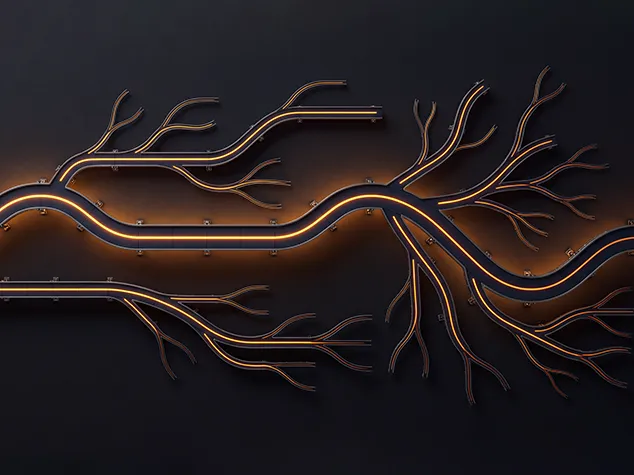
When we walk into a production plant, the first thing we look at is not the machines but the flow between them. The filler, the packaging machine and the palletizer are the organs. What carries product between them is the circulation. Daily output is rarely set by the best machine on the floor. It is set by the weakest link between two of them.
That is the sentence we are taking to the fair. Aliş Makina is the engineering company that builds a plant's circulation. Whoever built the machines, we design, manufacture and commission the route between them. That route can be a single conveyor or an entire line.
Why This Matters
In a new investment, every machine gets discussed on its own. Its rate, its cycle time and its delivery date are all settled one by one. The stretch between two machines usually gets a single line: a conveyor that connects them. Yet that line is what largely decides the count at the end of the shift.
Losses collect there, and no separate invoice ever arrives for them. The line keeps stopping briefly, nobody records it, and by the end of the shift the shortfall has added up. Product waits at one point and jams at another, and an operator clears it by hand. The machines ran, the line never stopped, and the count is still below the plan.
Why We Approach It This Way
Every project starts at the same place for us. We do not start with the conveyor; we start with where the loss collects. On the floor we look at four things first.
How far a stop travels. A line that halts at one point slows down the sections behind it.
The transfer points. A line has dozens of handovers, and each one takes a few seconds.
The points that need a pair of hands. If someone stands permanently at one spot, the line cannot resolve that spot on its own.
The places where product sticks to the belt. A line stopped for cleaning is a line not producing.
Seeing all four at once means reading the line as one circulation rather than as separate machines. We work in four areas on the floor. Product moves from filling to packaging, then from packaging to palletizing. Palletized loads travel to storage and dispatch, and unwrapped product needs handling of its own. Whichever of these a plant has, we build them as one flow instead of separate purchases.
The limit is worth stating plainly. This approach does not remove stops, and no conveyor design can. Machines will keep pausing for reels, cleaning and changeovers. What changes is how far a stop travels: it stays where it happened instead of pulling the neighboring sections into the same pause. We also do not supply the robots or the software a plant runs on. We build the backbone they attach to.
At Our Stand
We walk through how we read a plant this way, and where the flow usually slows first. We are at the stand for all four days.
Eurasia Packaging İstanbul, October 13-16, 2026
TÜYAP Büyükçekmece Fair and Congress Center
Hall 12A, Stand 1271A